
Strep Throat Symptoms, Diagnosis, and Treatment
Do you think you or your child may have strep throat? Learn the most common
strep throat symptoms, compare
strep vs viral sore throat, and understand when
medical treatment may be needed.
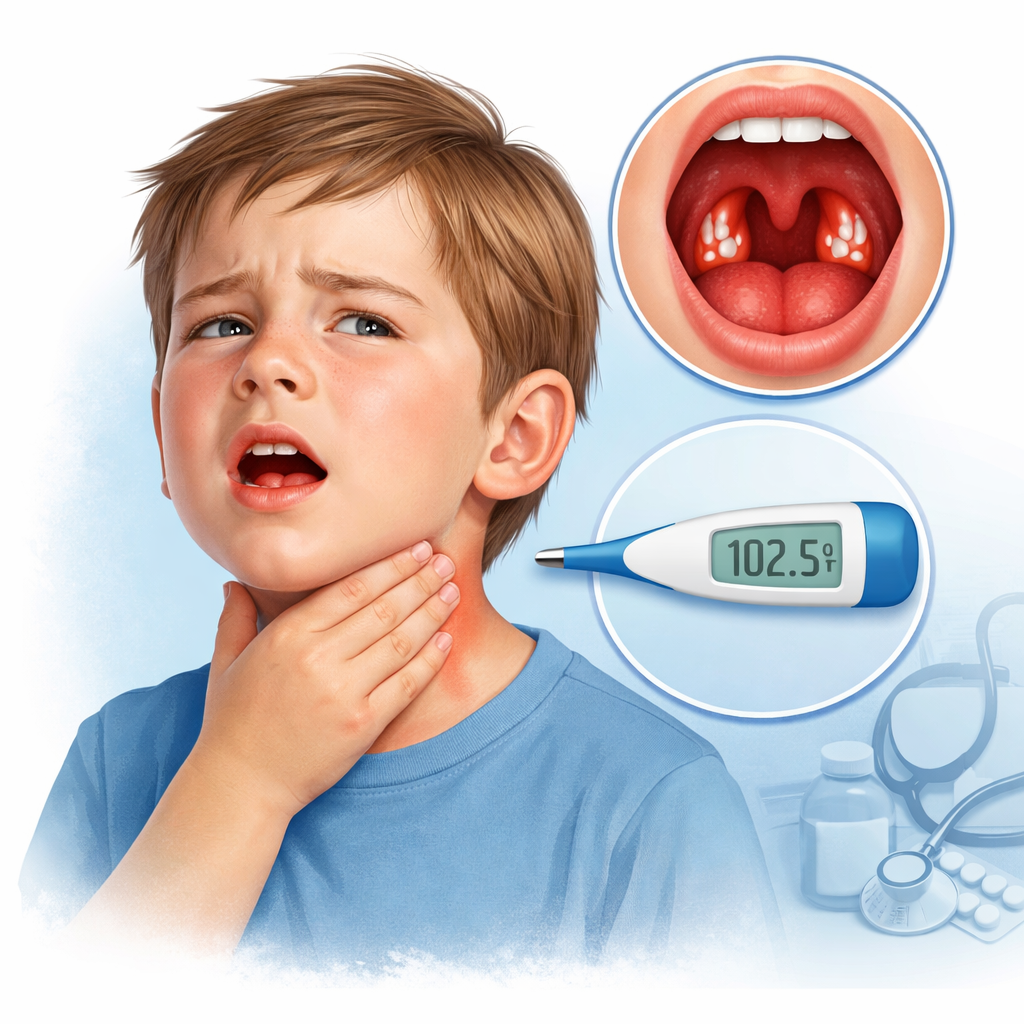
Watch: What Strep Throat Looks Like
This short video explains the most common strep throat symptoms, how doctors diagnose the infection, and when medical treatment may be needed.
Educational overview of strep throat symptoms and diagnosis.
Strep throat is a bacterial infection caused by group A Streptococcus bacteria. Common symptoms include sudden fever, painful swallowing, swollen tonsils, and white patches in the throat.
 Quick Answer
Could This Be Strep?
Strep throat is a bacterial infection that causes sudden fever, pain swallowing, and white patches on the tonsils – usually without cough or runny nose
Yes - These Match My Symptoms
See the most common signs and what to do next.
- Sudden Fever
- Painful Swallowing
- White Patches on Tonsils
I'm Not Sure Yet
Compare strep vs viral sore throat.
- See Key Differences
- When to Get Tested
- What Symptoms Mean
ℹ️ Not medical advice – this guide helps you understand your symptoms and next steps.
Strep Throat Symptoms
- Sudden fever (101°F+)
- White patches on tonsils
- Pain when swallowing
- Swollen lymph nodes
- Headache
- Nausea or vomiting (children)
- Red swollen tonsils
- No cough
What does strep throat look like?
Strep throat often causes visible inflammation in the throat and tonsils. During an examination, doctors look for several physical signs that may suggest a bacterial infection caused by group A Streptococcus bacteria.
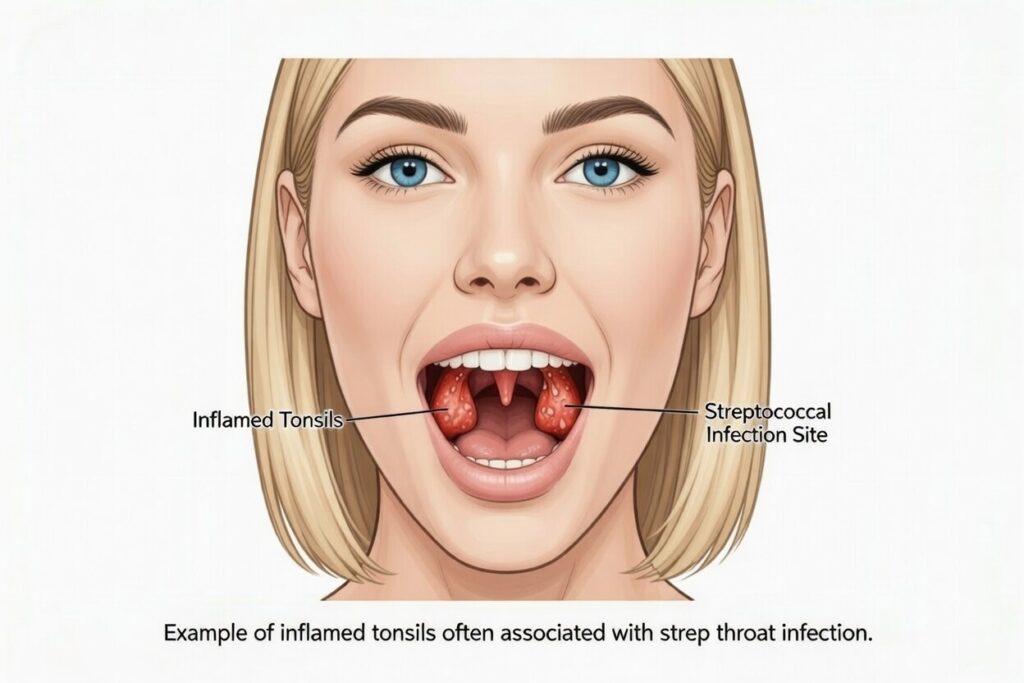
- Red and swollen tonsils
- White patches or streaks of pus on the tonsils
- Tiny red spots on the roof of the mouth (petechiae)
- Severe redness in the back of the throat
- Swollen lymph nodes in the neck
Strep Throat vs Viral Sore Throat
If symptoms match strep throat, a rapid strep test or throat culture can confirm the infection.
Antibiotics are usually required to treat bacterial strep throat and prevent complications.
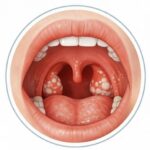
Strep Throat
- Sudden fever (101°F+)
- White patches on tonsils
- Pain when swallowing
- Swollen lymph nodes
- Usually no cough
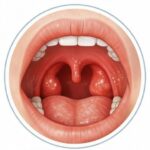
Viral Sore Throat
- Runny nose
- Cough
- Hoarse voice
- Mild throat irritation
- Symptoms develop gradually
What Should You Do If You Suspect Strep?
If symptoms match strep throat, a rapid strep test or throat culture can confirm the infection. Antibiotics are usually required to treat bacterial strep throat and prevent complications.
How Doctors Diagnose Strep Throat
Doctors usually diagnose strep throat using a rapid strep test
which can detect the bacteria within minutes.
If the rapid test is negative but symptoms strongly
suggest strep, a throat culture may be performed
for confirmation.

Frequently Asked Questions About Strep Throat
Can strep throat go away without antibiotics?
Strep throat is caused by group A streptococcus bacteria. While symptoms may improve over time, doctors usually prescribe antibiotics to clear the infection faster and reduce the risk of complications such as rheumatic fever or kidney inflammation.
How long is strep throat contagious?
Without treatment, a person with strep throat can remain contagious for several days. After starting antibiotics, most people are no longer contagious within about 24 hours.
What are the most common symptoms of strep throat?
Typical symptoms include sudden fever, painful swallowing, swollen lymph nodes, red tonsils, and white patches in the throat. Unlike viral sore throats, strep throat usually does not include cough or runny nose.
Can adults get strep throat?
Yes. Although strep throat is more common in children and teenagers, adults can also develop the infection. Adults may experience severe sore throat, fever, and difficulty swallowing.
How is strep throat diagnosed?
Doctors usually diagnose strep throat using a rapid strep test, which detects the bacteria in minutes. If the rapid test is negative but symptoms strongly suggest strep, a throat culture may be performed for confirmation.
When should I see a doctor for a sore throat?
You should seek medical evaluation if you have a high fever, severe throat pain, difficulty swallowing, swollen lymph nodes, or white patches on the tonsils. These symptoms may indicate a bacterial infection such as strep throat.
How long does strep throat last?
With antibiotics, symptoms often improve within 24–48 hours. Without treatment, symptoms may last several days and the infection can spread to others.
Our Medical Content Process
We aim to provide clear, research-based information to help people understand symptoms and make informed health decisions.
Research-Based Information
Our content is based on information from trusted medical organizations such as the CDC, Mayo Clinic, and the National Institutes of Health. We focus on providing clear explanations of symptoms, diagnosis, and treatment options.
Reviewed for Accuracy
Health information on this site is regularly reviewed and updated to ensure accuracy. Medical recommendations evolve over time, and we update our content to reflect current clinical guidance whenever possible.
Educational Purpose
This website is designed to help people understand symptoms and when medical evaluation may be needed. The information provided is for educational purposes and should not replace advice from a qualified healthcare professional.
Medical Sources and References
The information on this page is based on guidance from trusted medical and public health organizations. These sources help ensure the information provided is accurate and up to date.
- Centers for Disease Control and Prevention (CDC) – Strep Throat Information
- Mayo Clinic – Strep Throat Symptoms and Treatment
- National Institutes of Health (NIH) – Group A Streptococcal Infections
- American Academy of Pediatrics – Strep Throat in Children
Last Updated: March 2026
This content is for educational purposes only and is not intended to replace professional medical advice, diagnosis, or treatment from a qualified healthcare provider.
Strep Throat Guides: Symptoms, Diagnosis & Key Differences
Strep Throat vs Viral Sore Throat: Key Differences Explained
Early Signs of Strep Throat Most People Ignore
How Doctors Diagnose Strep Throat (Step-by-Step Guide)
Medical Disclaimer
The information provided on Best Docs Network is for educational and informational purposes only and is not intended as medical advice, diagnosis, or treatment. Always seek the advice of a qualified healthcare provider regarding any medical condition or symptoms. Never disregard professional medical advice or delay seeking care because of information found on this website. If you believe you are experiencing a medical emergency, call 911 immediately.